
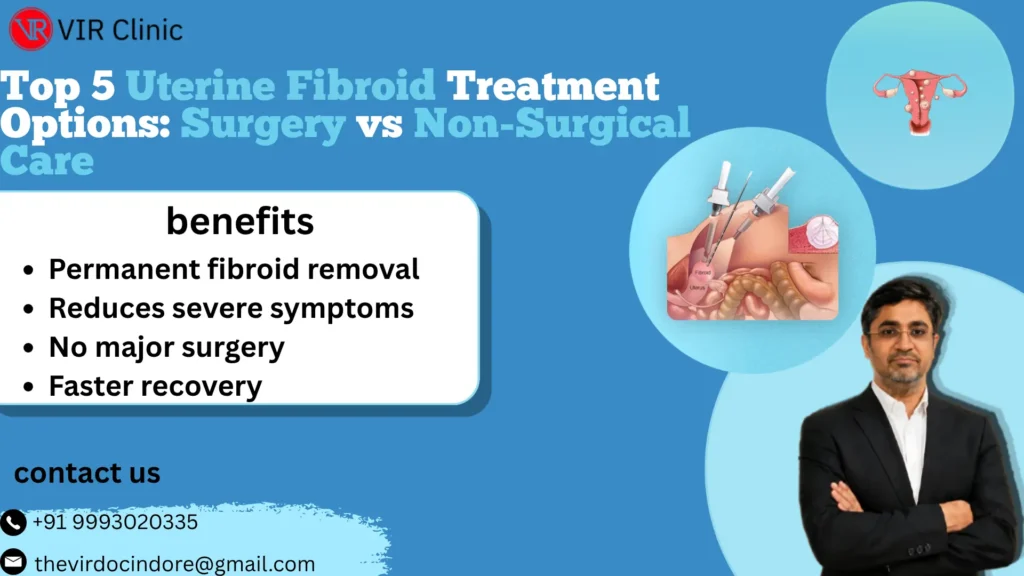
Top 5 Uterine Fibroid Treatment Options: Surgery vs Non-Surgical Care
Uterine fibroids are among the most common non-cancerous growths that develop in the uterus, affecting millions of women worldwide. While some fibroids remain small and cause no symptoms, others can lead to heavy menstrual bleeding, pelvic pain, pressure on nearby organs, frequent urination, constipation, and fertility concerns. Fortunately, several effective treatments are available today. Understanding the Top 5 Treatment Options for Uterine Fibroids can help women make informed decisions about their health and choose the most suitable treatment based on their symptoms and future goals.
Table of Contents
ToggleIf you have been diagnosed with fibroids, learning about the Top 5 Treatment Options for Uterine Fibroids can help you understand the benefits and limitations of each approach. Treatments range from medications and minimally invasive procedures to surgical options for more severe cases.
What Are Uterine Fibroids?
Uterine fibroids, also known as leiomyomas, are benign tumors that develop in or around the uterus. They vary greatly in size and number. Some women may have a single fibroid, while others may develop multiple fibroids of different sizes.
Common symptoms include:
- Heavy or prolonged menstrual bleeding
- Pelvic pressure or pain
- Frequent urination
- Constipation
- Lower back pain
- Pain during intercourse
- Difficulty conceiving in certain cases
Not every fibroid requires treatment. However, women experiencing significant symptoms should discuss the Top 5 Treatment Options for Uterine Fibroids with a specialist to determine the most appropriate treatment plan.
Top 5 Treatment Options for Uterine Fibroids
The Top 5 Treatment Options for Uterine Fibroids include both surgical and non-surgical approaches. The right treatment depends on fibroid size, location, symptoms, age, and future pregnancy plans.
1. Medications
For women with mild symptoms, medications are often recommended as the first line of treatment. These medications can help reduce heavy bleeding, manage pain, and regulate hormone levels.
Common medications include:
- Hormonal therapies
- Birth control pills
- Pain-relieving medications
- Medicines that reduce menstrual bleeding
While medications may improve symptoms, they generally do not remove fibroids permanently.
2. Uterine Fibroid Embolization (UFE)
Among the Top 5 Treatment Options for Uterine Fibroids, Uterine Fibroid Embolization (UFE) is one of the most effective minimally invasive treatments.
During UFE, a vascular interventional radiologist inserts a tiny catheter into an artery and blocks the blood supply feeding the fibroids. Without blood flow, the fibroids gradually shrink and symptoms improve.
Benefits of UFE include:
- No major surgery
- No stitches
- Minimal discomfort
- Short hospital stay
- Faster recovery
- Uterus preservation
- Quick return to daily activities
Many women prefer UFE because it effectively treats multiple fibroids while avoiding major surgery.
3. MRI-Guided Focused Ultrasound
This non-invasive procedure uses focused ultrasound energy to destroy fibroid tissue without surgical incisions.
Advantages include:
- No cuts or scars
- Outpatient treatment
- Minimal recovery time
- Reduced discomfort
However, this option is suitable only for selected patients after thorough evaluation.
4. Myomectomy
Myomectomy is a surgical procedure that removes fibroids while preserving the uterus. It is often recommended for women who wish to maintain fertility or plan future pregnancies.
Types of myomectomy include:
- Hysteroscopic myomectomy
- Laparoscopic myomectomy
- Open abdominal myomectomy
Myomectomy can effectively remove fibroids, but recovery varies depending on the surgical approach used.
5. Hysterectomy
A hysterectomy involves complete removal of the uterus and is considered a permanent solution for fibroids.
Doctors may recommend hysterectomy when:
- Fibroids are very large
- Symptoms are severe
- Other treatments have failed
- Future pregnancy is not desired
Although highly effective, recovery is generally longer compared to minimally invasive procedures.
Surgery vs Non-Surgical Care
When considering the Top 5 Treatment Options for Uterine Fibroids, many women wonder whether surgery or non-surgical care is the better choice.
Non-Surgical Treatments
- Preserve the uterus
- Faster recovery
- Shorter hospital stay
- Minimal scarring
- Lower risk of complications
Surgical Treatments
- Suitable for large or complex fibroids
- Effective in selected cases
- May provide permanent solutions
- Longer recovery period
Discussing the Top 5 Treatment Options for Uterine Fibroids with an experienced specialist can help determine the most appropriate treatment for your specific condition.
Why Choose Minimally Invasive Fibroid Treatment?
Modern minimally invasive procedures have transformed fibroid care. Among the Top 5 Treatment Options for Uterine Fibroids, treatments such as Uterine Fibroid Embolization offer excellent symptom relief while minimizing recovery time.
Benefits include:
- Less pain
- Minimal blood loss
- Smaller incision
- Lower complication rates
- Faster recovery
- Preservation of the uterus
These advantages make minimally invasive treatments an attractive option for many women seeking effective fibroid management.
Consult Dr. Amey Narkhede for Advanced Fibroid Treatment
If you are exploring the Top 5 Treatment Options for Uterine Fibroids, consult Dr. Amey Narkhede – Vascular Interventional Radiologist for expert guidance and personalized care.
Dr. Amey Narkhede specializes in advanced minimally invasive image-guided treatments, including Uterine Fibroid Embolization (UFE). At VIR Clinic, patients receive comprehensive evaluation and customized treatment plans designed to provide effective symptom relief with minimal downtime.
Whether you are considering surgery or a non-surgical approach, Dr. Amey Narkhede can help you understand the Top 5 Treatment Options for Uterine Fibroids and select the best treatment based on your individual needs.
Book your appointment today at VIR Clinic and take the first step toward lasting relief from uterine fibroids.
Frequently Asked Questions (FAQs)
What are the Top 5 Treatment Options for Uterine Fibroids?
The Top 5 Treatment Options for Uterine Fibroids include medications, Uterine Fibroid Embolization (UFE), MRI-guided focused ultrasound, myomectomy, and hysterectomy.
Can uterine fibroids be treated without surgery?
Yes. Non-surgical treatments such as UFE can effectively shrink fibroids and relieve symptoms without major surgery.
Is Uterine Fibroid Embolization safe?
Yes. UFE is considered a safe and effective minimally invasive treatment when performed by an experienced vascular interventional radiologist.
How long does recovery take after UFE?
Most women return to normal activities within a few days to one week after the procedure.
Which treatment is best for uterine fibroids?
The best treatment depends on the size and location of the fibroids, symptom severity, age, and future pregnancy plans.
How can I book an appointment with Dr. Amey Narkhede?
You can book an appointment at VIR Clinic for expert consultation and personalized treatment recommendations for uterine fibroids.