
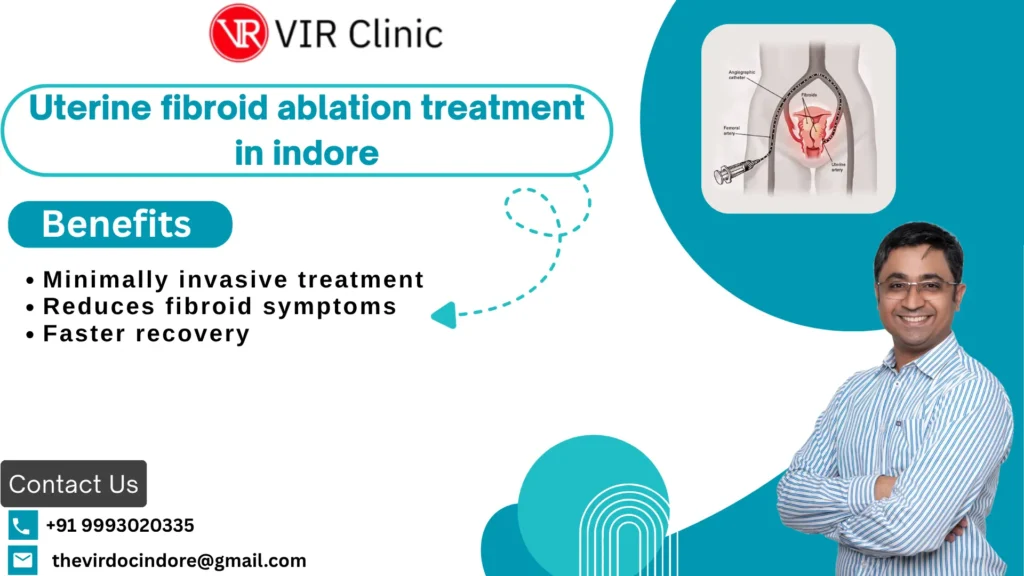
Uterine fibroids are non-cancerous growths that develop in or around the uterus. They are common during the reproductive years and may cause heavy menstrual bleeding, pelvic pressure, abdominal discomfort, frequent urination, constipation, or fertility-related concerns depending on their size and location.
For women exploring Uterine fibroid ablation treatment in indore, it is important to understand that treatment is not the same for every patient. The appropriate option depends on the number, size, location, and type of fibroids, symptoms, age, reproductive plans, and overall health.
Fibroid Treatment Without Surgery may be appropriate for selected patients who want a minimally invasive alternative to conventional surgery. Depending on the individual diagnosis, treatment options may include uterine fibroid embolization (UFE), image-guided ablation techniques, medication, or surgical procedures when clinically indicated.
Patients searching for Uterine fibroid ablation treatment in indore should first undergo an appropriate evaluation to determine whether ablation, embolization, or another treatment is suitable. A specialist assessment helps ensure that treatment is selected according to the patient’s individual condition rather than based solely on symptoms or online information.
Uterine Fibroids: Symptoms, Causes and Diagnosis
Fibroids can develop without causing symptoms, while others may significantly affect daily life. Symptoms often depend on where the fibroid is located and how large it becomes.
Common symptoms of uterine fibroids
Possible symptoms include:
- Heavy or prolonged menstrual bleeding
- Pelvic pressure or fullness
- Lower abdominal discomfort
- Painful periods
- Abdominal enlargement
- Frequent urination
- Constipation or pressure on the bowel
- Pain during sexual intercourse
- Fatigue associated with anemia from heavy bleeding
- Difficulty becoming pregnant in some cases
Not every symptom is necessarily caused by a fibroid. Other gynecological conditions can produce similar complaints, which is why proper diagnosis is important.
What causes uterine fibroids?
The exact cause of fibroids is not completely understood. Their development appears to involve several factors, including genetic, hormonal, and biological influences.
Fibroids can vary considerably in size and location. They may be found within the muscular wall of the uterus, project toward the uterine cavity, or grow outward from the uterus.
How are fibroids diagnosed?
Diagnosis generally starts with a medical history and physical examination. Pelvic ultrasound is commonly used to identify fibroids and assess their number and approximate size.
Depending on the clinical situation, additional imaging such as MRI may provide more detailed information about fibroid location, vascularity, and the uterus. This information can be particularly useful when planning an interventional procedure.
For patients considering Uterine fibroid ablation treatment in indore, imaging is an important part of determining whether a minimally invasive procedure is appropriate.
When should a woman seek evaluation?
Women should consider medical evaluation when menstrual bleeding becomes unusually heavy or prolonged, pelvic pressure persists, abdominal symptoms develop, or fibroid-related symptoms begin affecting daily activities.
Persistent heavy bleeding can contribute to iron-deficiency anemia, so appropriate evaluation should not be delayed.
Fibroid Treatment Without Surgery and Ablation Options
The goal of Fibroid Treatment Without Surgery is to manage fibroid-related symptoms while avoiding major surgical intervention when a patient is clinically suitable for a minimally invasive approach.
What is fibroid ablation?
Fibroid ablation refers to minimally invasive techniques that use controlled energy to destroy or shrink targeted fibroid tissue. Depending on the specific technique, energy may be delivered through a specialized probe under imaging guidance.
The suitability of ablation depends on the fibroid’s size, location, number, composition, and relationship to surrounding structures. Not every fibroid can or should be treated with ablation.
What is uterine fibroid embolization?
Uterine fibroid embolization (UFE) is another minimally invasive treatment option. During the procedure, an interventional radiologist uses image guidance to access the arteries supplying the uterus and introduces small particles that reduce blood flow to the fibroids.
Reduced blood supply causes the fibroids to shrink over time and can help improve symptoms such as heavy menstrual bleeding and pelvic pressure.
UFE and fibroid ablation are different procedures. The appropriate treatment should be determined after reviewing the patient’s imaging and clinical requirements.
Who may benefit from non-surgical treatment?
Selected patients may be considered for minimally invasive treatment when fibroids are responsible for significant symptoms and the patient wants to explore an alternative to major surgery.
However, the decision depends on:
- Fibroid size and location
- Number of fibroids
- Symptoms and their severity
- Previous treatments
- Overall health
- Uterine anatomy
- Pregnancy and fertility considerations
- Findings on ultrasound or MRI
A Fibroid Specialist in Indore can assess these factors and explain the available treatment choices.
Potential benefits of minimally invasive treatment
For appropriate patients, minimally invasive fibroid treatment may offer:
- No large abdominal incision
- Reduced tissue disruption compared with major open surgery
- Treatment directed at the fibroid or its blood supply
- Potentially shorter recovery than major surgery
- Management of symptoms without removing the uterus in selected cases
- An alternative for women who are not candidates for, or prefer to avoid, certain surgical procedures
The benefits and risks differ between procedures and patients. A minimally invasive treatment should never be recommended solely because it is less invasive.
Is fibroid treatment without surgery always possible?
No. Some fibroids require surgical treatment, particularly when their location, size, symptoms, or other clinical factors make minimally invasive options unsuitable.
A specialist consultation is therefore essential before choosing a treatment.
For women researching Uterine fibroid ablation treatment in indore, the best treatment decision should be based on medical evaluation, imaging findings, and individual treatment goals.
Recovery, Comparison and Choosing a Fibroid Specialist
Recovery depends on the treatment performed, the size and number of fibroids, and the patient’s overall health. Minimally invasive procedures generally involve smaller access points than major abdominal surgery, but they still require appropriate monitoring and follow-up.
Recovery after minimally invasive fibroid treatment
After an interventional procedure, patients may experience temporary pelvic discomfort, cramping, tiredness, or mild nausea depending on the treatment used. The treating team may prescribe medication to manage symptoms during recovery.
Patients should follow their specialist’s instructions regarding activity, medication, hydration, wound care, and follow-up appointments.
The time required to notice improvement in symptoms can vary. Some symptoms may improve relatively soon, while reduction in fibroid size can take longer.
Comparing common fibroid treatment options
| Treatment | Approach | Main consideration |
| Medication | Non-procedural | May control symptoms but does not necessarily eliminate fibroids |
| Fibroid ablation | Minimally invasive | Suitable only for selected fibroids |
| Uterine fibroid embolization | Minimally invasive | Reduces blood flow to fibroids |
| Myomectomy | Surgical | Removes fibroids while preserving the uterus |
| Hysterectomy | Surgical | Removes the uterus and is definitive for fibroids |
The most suitable treatment depends on the patient’s symptoms, fibroid characteristics, reproductive plans, medical history, and treatment preferences.
How should you choose a specialist?
When searching for a Fibroid Specialist in Indore, patients should consider whether the doctor performs a detailed evaluation, uses appropriate imaging, explains both minimally invasive and surgical options, and discusses potential benefits and risks clearly.
Dr. Amey Narkhede is a Vascular Interventional Radiologist specializing in minimally invasive treatments. Patients can discuss whether an interventional approach is appropriate after their fibroid evaluation and imaging.
Frequently Asked Questions
1. What is uterine fibroid ablation?
Uterine fibroid ablation is a minimally invasive technique that uses controlled energy to treat selected fibroid tissue. The exact method depends on the patient’s fibroid characteristics and the available clinical approach.
2. Can fibroids be treated without surgery?
Yes. Selected patients may be candidates for minimally invasive treatments such as fibroid ablation or uterine fibroid embolization. However, not every fibroid is suitable for non-surgical treatment.
3. Is uterine fibroid embolization the same as fibroid ablation?
No. UFE works by reducing the blood supply to fibroids, whereas ablation uses controlled energy to treat fibroid tissue. Both are minimally invasive approaches but work differently.
4. How are fibroids diagnosed?
Pelvic ultrasound is commonly used for diagnosis. MRI may be recommended when more detailed information about fibroid size, location, number, or anatomy is required for treatment planning.
5. Can fibroid treatment preserve the uterus?
Some treatments, including selected minimally invasive procedures and myomectomy, can treat fibroids while preserving the uterus. Whether a particular treatment is appropriate depends on the patient’s condition and reproductive goals.
6. Is fibroid ablation painful?
Pain and discomfort vary depending on the procedure and individual patient. Appropriate anaesthesia and pain-management measures are generally used during minimally invasive treatment, followed by post-procedure care.
7. How long does recovery take after minimally invasive fibroid treatment?
Recovery varies according to the procedure and individual health. Your specialist will provide specific guidance about activity, medication, follow-up, and expected symptom improvement.
8. Can fibroids return after treatment?
Some treatments target existing fibroids rather than eliminating the possibility of developing new fibroids. Follow-up may therefore be recommended based on the patient’s symptoms and clinical situation.
9. How do I find fibroid treatment near me in Indore?
Patients searching for treatment near me can consult a gynecologist or interventional radiologist experienced in fibroid evaluation and minimally invasive treatment. Imaging is usually important before deciding on a procedure.
10. What is the cost of fibroid treatment?
There is no single fixed cost. Treatment expenses depend on the procedure selected, number and size of fibroids, imaging requirements, hospital facilities, medications, and other individual factors. A personalized estimate can be provided after evaluation.
Uterine fibroid ablation treatment in indore: Book Your Consultation
Choosing Uterine fibroid ablation treatment in indore should begin with an accurate diagnosis and detailed discussion of available options. Minimally invasive treatment can be an effective option for selected patients, but the right approach depends on the individual fibroid characteristics and the patient’s medical and reproductive goals.
If you are experiencing heavy periods, pelvic pressure, abdominal discomfort, or other symptoms associated with uterine fibroids, a specialist consultation can help determine the cause and identify appropriate treatment options.
Dr. Amey Narkhede – Vascular Interventional Radiologist | Best Doctor Minimally Invasive Treatments | VIR Clinic provides evaluation and minimally invasive treatment services for suitable patients.
Book an appointment with Dr. Amey Narkhede to discuss your fibroid symptoms, imaging findings, and available treatment options.
Phone: 099930 20335
Email: thevirdocindore@gmail.com
Location: 19, Near Medicare Hospital, Ravindra Nagar, Indore, Madhya Pradesh 452018