
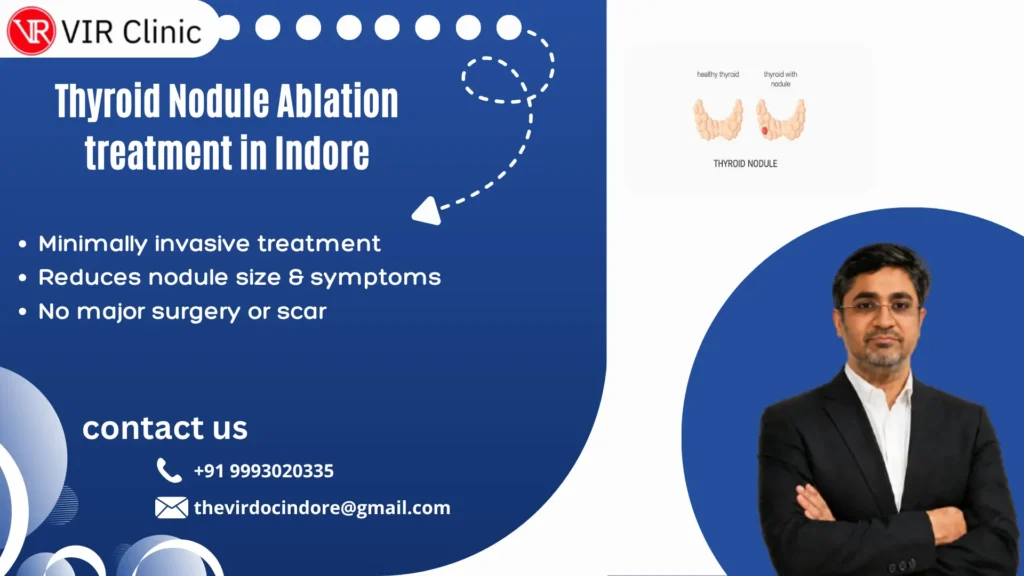
A thyroid nodule is a localized growth within the thyroid gland. Most thyroid nodules are benign, but some can become large enough to cause visible neck swelling, pressure, discomfort, difficulty swallowing, or cosmetic concerns. Proper evaluation is important before deciding whether a nodule needs observation, surgery, or an alternative treatment.
Thyroid Nodule Ablation treatment in Indore is a minimally invasive approach that may be considered for selected patients with benign, symptomatic thyroid nodules. Radiofrequency ablation (RFA), one commonly used technique, uses ultrasound guidance to place a thin electrode into the nodule and deliver controlled energy to reduce the abnormal tissue. The nodule gradually shrinks over time rather than being surgically removed.
The suitability of ablation depends on factors such as the nodule’s ultrasound appearance, biopsy findings, size, composition, symptoms, thyroid function, and the patient’s overall health. It should not be assumed that every thyroid nodule is suitable for ablation.
For patients searching for Thyroid Nodule Treatment Without Surgery in Indore, consultation with an experienced interventional radiologist can help determine whether a minimally invasive approach is appropriate.
Understanding Thyroid Nodules and When Treatment May Be Needed
What is a thyroid nodule?
A thyroid nodule is an area of abnormal tissue within the thyroid. Nodules can be solid, cystic, or partly cystic. Many are discovered incidentally during a neck examination or ultrasound and do not require immediate treatment. The American Thyroid Association notes that most thyroid nodules are benign.
A benign nodule may still require treatment when it becomes large, grows over time, produces pressure-related symptoms, affects appearance, or is associated with excessive thyroid hormone production.
Symptoms of thyroid nodules
Small nodules may cause no symptoms. Larger or strategically located nodules may produce:
- A visible lump or swelling in the neck
- A feeling of pressure in the throat
- Difficulty swallowing
- Neck discomfort
- Hoarseness or voice-related symptoms
- Breathing discomfort in some cases
- Cosmetic concerns due to a visible neck swelling
Symptoms alone cannot determine whether a nodule is benign or malignant. Medical assessment is necessary.
Causes and risk factors
The exact cause of an individual thyroid nodule is not always identifiable. Nodules may occur as part of normal changes in the thyroid, multinodular thyroid disease, thyroid inflammation, iodine-related disorders, or other thyroid conditions. Some nodules may also be associated with thyroid cancer.
Because a small proportion of thyroid nodules are malignant, appropriate diagnostic evaluation should come before considering ablation.
Diagnosis before ablation
Evaluation generally includes a detailed medical history, clinical examination, thyroid ultrasound, and thyroid blood tests when appropriate. Fine-needle aspiration (FNA) or another biopsy assessment may be recommended depending on the nodule’s characteristics.
Ultrasound is particularly important because it helps characterize the nodule and is also used to guide minimally invasive procedures.
For Thyroid Nodule Ablation treatment in Indore, Dr. Amey Narkhede evaluates the available diagnostic information before recommending an appropriate treatment pathway.
How Thyroid Nodule Ablation Works
What happens during the procedure?
Thyroid Nodule Ablation treatment in Indore generally involves image-guided treatment rather than a traditional surgical incision. For radiofrequency ablation, the patient is positioned comfortably while ultrasound is used to visualize the thyroid and the target nodule.
A thin ablation electrode is carefully introduced into the nodule. Controlled radiofrequency energy produces heat within the targeted tissue. The treated cells are damaged, and the body gradually removes or remodels the treated tissue, allowing the nodule to decrease in volume over time.
The exact technique, treatment duration, and number of treatment sessions depend on the nodule’s size, location, composition, and other patient-specific factors.
Who may be considered for ablation?
Ablation is generally considered for appropriately evaluated patients with benign thyroid nodules that are causing symptoms or cosmetic concerns and who want to avoid or are seeking an alternative to surgery. International recommendations emphasize appropriate patient selection and procedural expertise.
Ablation is not automatically appropriate for every thyroid nodule. A known thyroid cancer generally requires a different treatment strategy, although selected thyroid cancer situations may have specialized ablation approaches under appropriate expert guidance.
Benefits of minimally invasive treatment
Potential advantages of suitable thyroid nodule ablation can include:
- No conventional surgical incision
- Minimally invasive needle-based treatment
- Preservation of the remaining thyroid tissue
- Potential reduction in pressure or cosmetic symptoms as the nodule shrinks
- Usually less disruption to daily activities than conventional surgery
- Avoidance of a traditional neck surgical scar
However, outcomes vary from patient to patient. RFA studies have demonstrated substantial long-term volume reduction in appropriately selected benign nodules, while some nodules may require additional treatment or follow-up.
Recovery, Comparison and Patient Questions
Recovery after thyroid nodule ablation
One of the important features of Thyroid Nodule Ablation treatment in Indore is that it is minimally invasive. Many patients can return to routine activities relatively quickly, depending on the procedure and their individual condition.
Temporary soreness, mild swelling, tenderness, or discomfort around the treatment area can occur. Your treating doctor will provide specific instructions regarding medicines, activity, wound care if applicable, and follow-up.
Follow-up is important because the objective is usually gradual reduction in nodule volume rather than immediate removal. Ultrasound may be used to assess the response over time, and thyroid function may also be monitored when clinically appropriate.
Thyroid ablation vs surgery
| Factor | Thyroid Nodule Ablation | Thyroid Surgery |
| Approach | Minimally invasive, image-guided | Surgical removal |
| Incision | No conventional surgical incision | Neck incision |
| Target | Selected thyroid nodule | Part or all of the thyroid may be removed |
| Thyroid tissue | Generally preserved | Some or all thyroid tissue may be removed |
| Anesthesia | Depends on technique and patient | Usually requires anesthesia |
| Recovery | Often shorter, but varies | Usually longer than a needle-based procedure |
| Suitability | Selected benign nodules and other carefully selected cases | Appropriate for many nodules, including situations where surgery is indicated |
The choice should not be based simply on the desire to avoid surgery. Diagnosis, nodule characteristics, symptoms, thyroid function, cancer risk, previous treatment, and patient preferences all need to be considered.
For people comparing Thyroid Nodule Treatment Without Surgery with an operation, a consultation can clarify whether ablation is medically suitable or whether surgery remains the better option.
Frequently Asked Questions
1. What is thyroid nodule ablation?
Thyroid nodule ablation is a minimally invasive procedure that uses a needle-based technique to destroy selected thyroid nodule tissue. Radiofrequency ablation uses controlled heat delivered under ultrasound guidance.
2. Is thyroid nodule ablation an alternative to surgery?
For selected patients with appropriately diagnosed benign thyroid nodules, ablation can be an alternative to surgery. However, it is not suitable for every patient or every thyroid nodule.
3. Is thyroid nodule ablation painful?
Patients may experience pressure, mild discomfort, or temporary soreness. The type of local anesthesia or pain control used depends on the procedure and the treating doctor.
4. How long does it take for a thyroid nodule to shrink?
Shrinkage occurs gradually rather than immediately. The degree and speed of reduction vary according to the nodule’s characteristics and the treatment technique. Follow-up ultrasound helps assess the response.
5. Can thyroid ablation treat thyroid cancer?
Routine ablation for benign nodules should not be confused with treatment for thyroid cancer. Cancerous nodules require specialist evaluation and an individualized treatment plan. Selected cancer cases may have specialized minimally invasive treatment options, but these decisions require careful assessment.
6. Will my thyroid function be affected after ablation?
One potential advantage of treating only the nodule is preservation of surrounding thyroid tissue. Nevertheless, thyroid function depends on the underlying thyroid condition, and appropriate patients may require thyroid-function monitoring.
7. Is thyroid nodule ablation available in Indore?
Yes, patients in Indore can consult a qualified vascular interventional radiologist to determine whether image-guided thyroid nodule ablation is appropriate for their condition.
8. What does thyroid nodule ablation cost in Indore?
There is no single appropriate price for every patient. The cost depends on factors such as nodule size and composition, diagnostic requirements, treatment technique, number of sessions, facility charges, and the patient’s individual medical condition. A consultation is required for an accurate estimate.
9. How do I find thyroid nodule ablation near me?
Patients looking for thyroid nodule ablation near me should prioritize an experienced specialist, proper diagnostic evaluation, appropriate imaging guidance, and a treatment plan based on their individual thyroid condition rather than choosing a provider only by location.
Conclusion
Thyroid Nodule Ablation treatment in Indore offers a minimally invasive treatment option for carefully selected patients, particularly those with benign thyroid nodules that cause symptoms, pressure, growth, or cosmetic concerns. Radiofrequency ablation and other ablation techniques can reduce targeted nodule tissue while avoiding conventional thyroid surgery in appropriate cases.
However, ablation is not a universal replacement for surgery. Proper ultrasound assessment, biopsy when indicated, thyroid-function evaluation, and specialist consultation are essential before treatment. The final recommendation should always be based on the patient’s individual condition rather than a standard treatment formula.
If you are considering Thyroid Nodule Ablation treatment in Indore, consult Dr. Amey Narkhede – Vascular Interventional Radiologist | Best Doctor Minimally Invasive Treatments | VIR Clinic for an individualized evaluation and to understand whether a minimally invasive approach is appropriate for you.
Book an appointment:
Dr. Amey Narkhede – Vascular Interventional Radiologist VIR Clinic 19, near Medicare Hospital, Ravindra Nagar, Indore, Madhya Pradesh 452018
Phone: 09993020335
Email: thevirdocindore@gmail.com